Three people talking to each other with bubbles above them with the inscription "National Agencies Event".

SALTO inclusion session at the Erasmus+ NA Meeting in Brussels

The European Commission  organised the annual Erasmus+ National Agencies’ event from 27–29 January 2026, in Brussels. The three-day event was held at the Thon Hotel bringing together directors and staff from Erasmus+ National Agencies across Europe to discuss future of Erasmus+ programme. The agenda included both directors, horizontal and field specific sessions addressing topics such as accreditation systems, centralised actions, data analysis, and inclusion.

As part of the inclusion focus, the SALTO Inclusion and Diversity in Education and Training (SALTO ID ET) and the SALTO Inclusion and Diversity Youth (SALTO ID YOU) co-facilitated dedicated sessions. On 27 January, Dora Lukač, acting Head of SALTO ID ET, and Pieter-Jan De Graeve, team coordinator of the SALTO ID YOU, led a session for approximately 100 National Agency directors, and on 28 January, they co-facilitated a similar session for around 60 NA staff members.

During these sessions, participants examined both existing measures and tools that could be improved, alongside new ideas aimed at increasing opportunities for persons with fewer opportunities. The discussions contributed to shaping potential updates to current measures and the development of new ID initiatives in Erasmus+ post-2027. Key topics addressed included the Erasmus+ ID Strategy, accessibility and user-friendliness of the programme, specific programme actions such as accreditations and small-scale partnerships, financial support mechanisms, funding rules and unit costs, as well as NA-level outreach and support, and open topics for new proposals.

Each session followed a clear structure, beginning with a 5-minute framing and introduction, followed by a 25-minute reality check on how inclusive current practices are and what improvements can be made. Then, participants engaged in a 40-minute forward-looking discussion to envision the future of inclusion within Erasmus+. The session concluded with a 20-minute overview summarising key points, and the proposals and insights shared by participants will be carefully analysed and considered in the ongoing preparation and development of future programme measures.

A logo of the SALTO network spelling "SALTO News", with a small airplane flying off from a yellow sun-like circle.

The January edition of SALTO News is out!

On November 24, SALTO ID ET organised the 9th Meeting of Inclusion and Diversity Officers on „Green Inclusion“ for more than 40 ID Officers and NA staff interested in the intersection of inclusion and diversity on the one hand and the environment and fight against climate change on the other.

In this month’s edition of SALTO News, you will also find:

SALTO News is the official newsletter for the SALTO community—a network of 11 resource centres dedicated to promoting and enhancing the Erasmus+ and European Solidarity Corps programmes. You can browse previous editions of the newsletter here!

To stay informed about the most recent developments and never miss an update, be sure to subscribe to SALTO News today!

A collage of cards announcing "live dialogues on Inclusion Insights" with Mr. Tihomir Žiljak, Prof. Dejana Bouillet, PhD and Prof. Lelia Kiš-Glavaš, PhD

Inclusion Insights – A Deeper Look Into Inclusion

What do inclusion and diversity (ID) in education and training mean from the point of view of experts – those whose main line of work is to both study and practice it? Filling the need of National Agencies (NAs) and other education stakeholders for a deeper look at the concept, SALTO ID ET is happy to present its newest format: Inclusion Insights.

Inclusion Insights are a series of short articles by esteemed scholars and practicioners from the field of inclusion and diversity which aim to shine light on selected aspects of ID. The first article, Turn on inclusion, turn off exclusion by Tihomir Žiljak, PhD (Croatian Andragogy Society / ID Ambassador for Croatian Agency for Mobility and EU Programmes) tackles the European dimension of inclusion work and its long-term societal impact. The second one, Can peer support increase the participation of students who encounter obstacles in higher education in international mobility programmes? by Prof. Lelia Kiš-Glavaš, (University of Zagreb, Faculty of Education and Rehabilitation Sciences/ID Ambassador for Croatian Agency for Mobility and EU Programmes), deals with the potential of peer support for bolstering academic achievement and social inclusion, including through Erasmus+ mobilities. Finally, the text on Inclusive education: between regulations and the needs of children and young people by Prof. Dejana Bouillet, PhD (University of Zagreb, Faculty of Humanities and Social Sciences Department of Pedagogy) addresses the concept of Universal Design for Learning and the value of holistic and participatory approaches to inclusion in education.

Inclusion can be learned. However, it is first and foremost about seeing a person as a whole. That is why, besides publishing the articles, SALTO ID ET invited NA staff from across Europe to listen in on three online sessions to hear first-hand from their authors. The authors of the articles talked to experienced moderator and inclusion practitioner Snežana Bačlija Knoch in 1-hour lunchtime interviews on November 19, November 26 and December 3, with more than 60 staff members of National Agencies altogether tuning in.

The articles are meant to inspire and raise awareness among the staff of National Agencies working with inclusive Erasmus+ projects but also all those who are interested in what inclusive education and training looks like in practice.  SALTO ID ET plans to continue with the Inclusion Insights format in 2026 and publish new pieces in its Inspiration Library, bringing new and interesting expertise by researchers and practitioners to deepen the understanding of ID both on the level of the institutions promoting it in Erasmus+ and amongst the general public.

A logo of the SALTO network spelling "SALTO News", with a small airplane flying off from a yellow sun-like circle.

The December edition of SALTO News is out!

On November 6 and 7, SALTO Inclusion and Diversity in Education and Training and the Academic Cooperation Association co-hosted a two-part webinar titled “How to Create the Role of an Inclusion Officer at Your Institution” for more than 200 participants from higher education institutions as well as National Agencies across Europe.

In this month’s edition of SALTO News, you will also find:

SALTO News is the official newsletter for the SALTO community—a network of 11 resource centres dedicated to promoting and enhancing the Erasmus+ and European Solidarity Corps programmes. You can browse previous editions of the newsletter here!

To stay informed about the most recent developments and never miss an update, be sure to subscribe to SALTO News today!

A group photo.

25 Years of SALTO Network: Celebrating the People Behind the Work

In 2025, the SALTO Network celebrates its 25th anniversary, marking a quarter century of supporting quality and cooperation within the European programmes for youth, education and training. What started as a small initiative at the turn of the millennium has grown into a strong network of 11 Resource Centres working across Europe and beyond.

As part of the anniversary celebrations, the SALTO Network has launched Humans of SALTO 2025 – an online storytelling project that highlights the people behind the network. Inspired by the “Humans of…” concept, the project shares personal reflections from individuals who have contributed to the network’s creation, growth and impact over the years.

Among the distinguished individuals featured in the short portrait pieces, SALTO ID ET is proud to highlight Mr Josip Luša, one of the founders of our own Resource Centre for Inclusion and Diversity in Education and Training and its former Head.

To better understand the roots of this journey, we invite you to read our article How did SALTO start?, which looks back at the early days of the network and the vision that shaped its development. Discover the stories, celebrate the people, and join us in marking 25 years of SALTO – past, present and future.

A computer screen with talking heads in an online meeting and the inscription "0th Meeting of Inclusion and Diversity Officers" above it.

9th Meeting of Inclusion and Diversity Officers on „Green Inclusion“ Held

On 24 November 2025, the 9th meeting of Inclusion and Diversity (ID) Officers, organised by SALTO Resource Center for Inclusion and Diversity in Education and Training (SALTO ID ET), was held online, bringing together over 40 ID Officers and staff from National Agencies (NAs) across Europe, alongside representatives of the European Commission. The meeting was dedicated to the topic of “green inclusion” – the intersection of two horizontal priorities of the Erasmus+ programme, namely inclusion and diversity and the environment and fight against climate change. The meeting was facilitated by Ms. Snežana Bačlija Knoch.

Screenshot from a Zoom online meeting with a female speaker showing a presentation slide on good practices in the field of green inclusion.

The meeting opened with a warm welcome by Ms. Dora Lukač, Acting Head of SALTO ID ET, who briefly presented the current activities of the Resource Centre. The first session, a panel discussion on How inclusion and sustainability can go together, included contributions on different stakeholders’ perspectives by Ms. Brigita Jerić (social worker and Erasmus+ project coordinator at Slava Raškaj Centre for Education, Zagreb/ID Ambassador for the Croatian Agency for Mobility and EU Programmes), Mr. Henrique Gonçalves (SALTO ID Youth, coordinator of the LTA Bridging Voices: Empowering Youth Diversity for Climate Justice) and Prof. Dražen Šimleša, PhD (RIPESS Europe – Solidarity Economy Europe/researcher at the Ivo Pilar Institute for Social Sciences, Zagreb).

In the second part of the meeting, the participants joined working groups to explore the link between the two topics in their NA work. Their discussions mirrored various aspects of green inclusion, including barriers and opportunities in local or national contexts; examples of good practice from local communities, e.g. in energy production and food waste reduction; the need for capacity building and collaboration on the topic between ID Officers and Green Contact Points in NAs; and inclusive NA practices for supporting beneficiaries in working on projects addressing the environment and the fight against climate change.

Following the working sessions, Ms. Anne-Louise Dupin from the SALTO Resource Center for Green Transition and Sustainable Development presented some examples of good practice from SALTO Green’s Collection of Green Projects for Erasmus+ and the European Solidarity Corps. Finally, the last part of the meeting consisted of an open agenda in which Ms. Tajana Krstonošić (SALTO ID ET) briefly talked about the European Commission’s Erasmus+ and ESC Inclusion Campaign planned for 2026, while Ms. Špela Močilnikar (CMEPIUS) spoke about the results of research done at her institution on inclusion in Key Activity 1 in the sector od Adult Education.

The meeting was officially closed by Snežana Bačlija Knoch and Hrvoje Ryznar (SALTO ID ET), who thanked everyone for their participation and encouraged them to join the next meeting in Croatia in March 2026.

2025_11_19_DZS_Ceeducon_2400px-1483

SALTO ID ET in CEEDUCON 2025

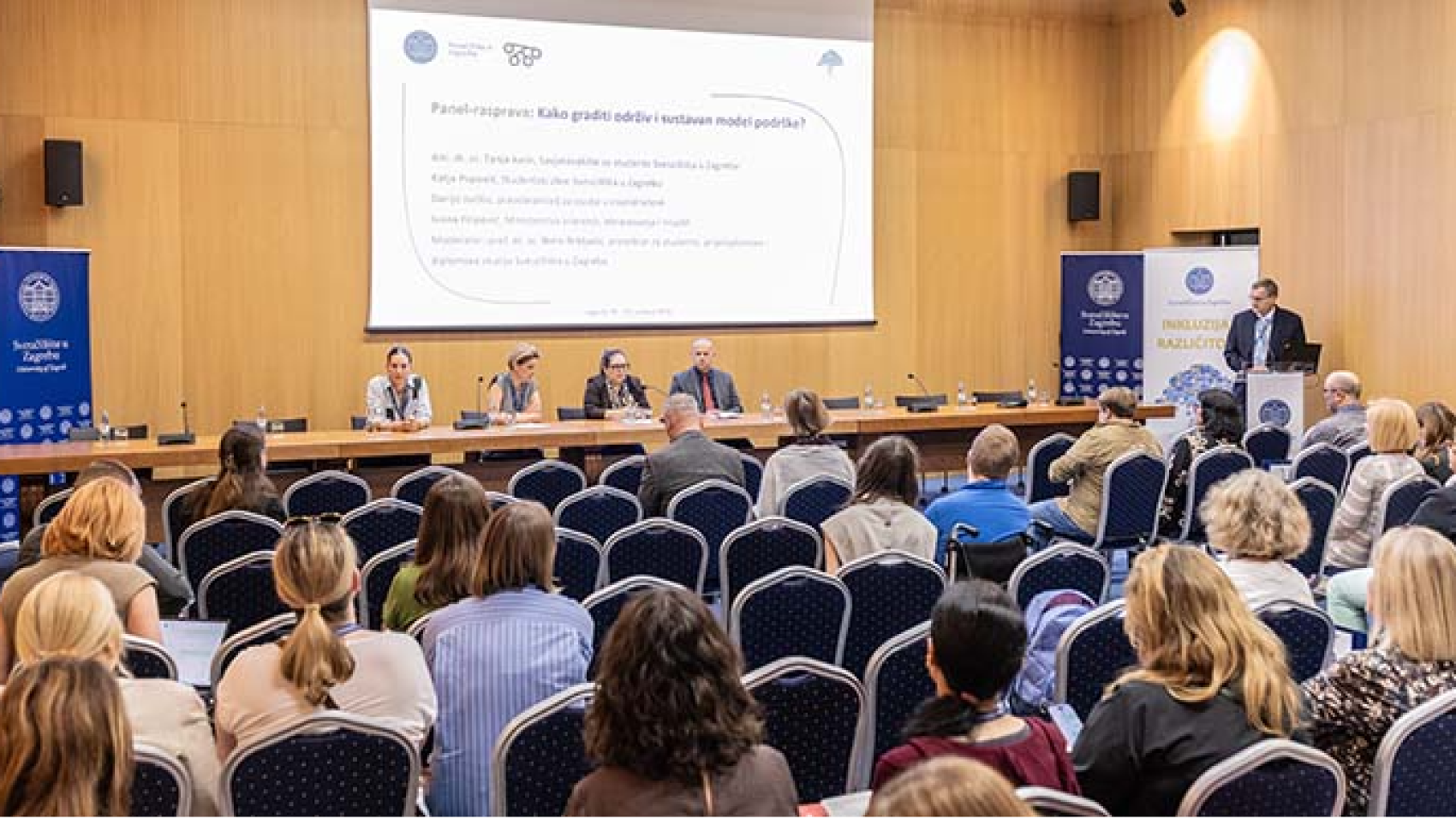
SALTO Inclusion and Diversity in Education and Training participated in this year’s CEEDUCON (Central European Conference on Internationalisation of Higher Education), which took place on 19–20 November 2025 in Prague. Organised by the Czech National Agency for International Education and Research (DZS) in cooperation with national agencies from Austria, Germany, Poland, Hungary and Slovakia, the event drew around 900 participants from universities, national agencies, and higher-education organisations. The program featured more than 50 sessions and workshops.

Our representative, Petra Habulin Musladin, held a session together with Martin Bogdan from the Academic Cooperation Association (ACA) and Aaron Kang, Inclusion Officer at TU Darmstadt. They briefly presented our recently published practical guide, Establishing the Role of an Inclusion Officer in a Higher Education Institution, and shared key findings, challenges, and benefits. The discussion focused on practical steps, advocacy, and real-life examples. Attendees had the opportunity to explore and discuss how to implement this role within their own institutions.

A logo of the SALTO network spelling "SALTO News", with a small airplane flying off from a yellow sun-like circle.

The November edition of SALTO News is out!

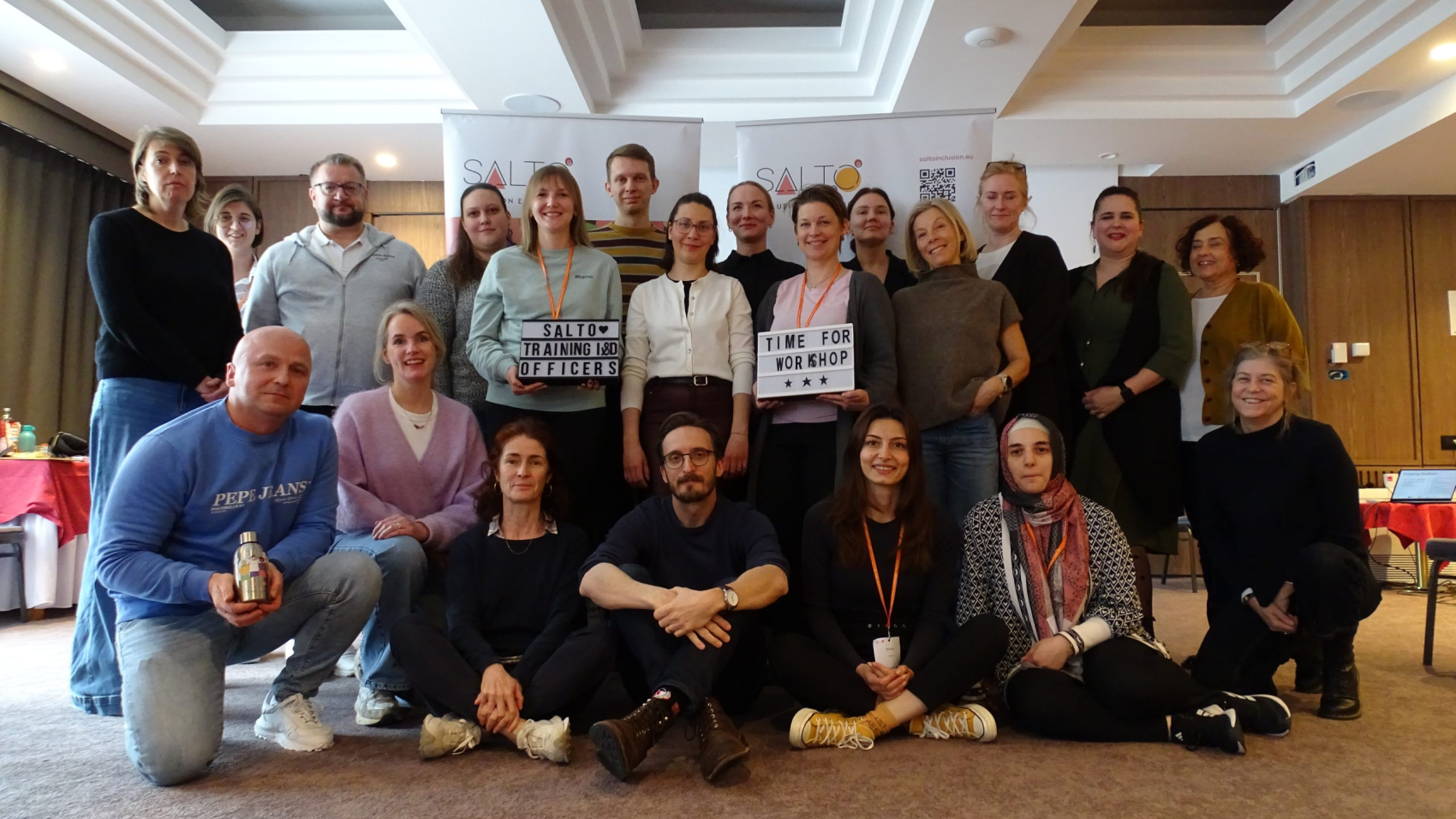
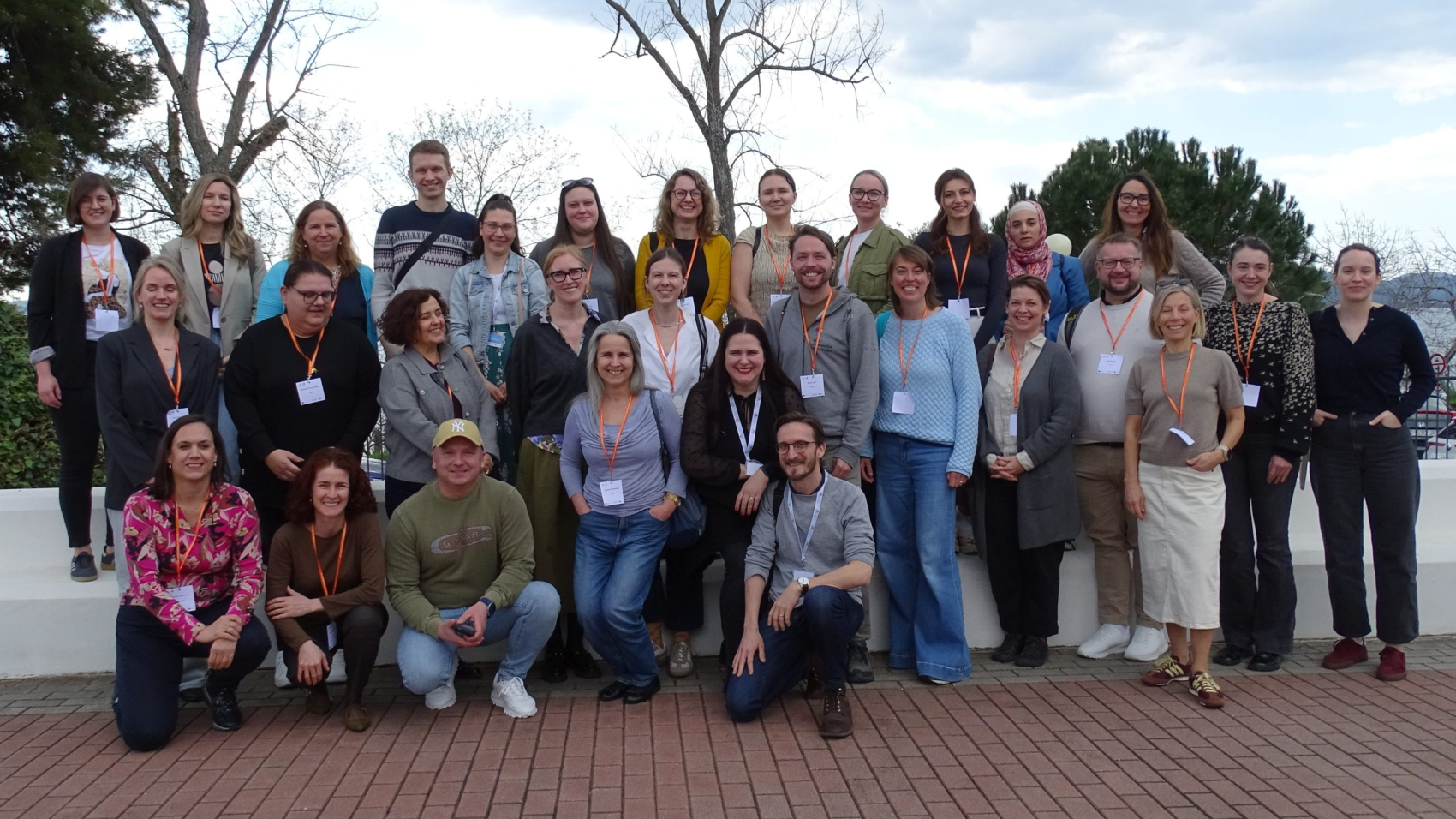
In early October (6th – 8th), SALTO ID ET held an event in Zagreb for ID Officers and other interested NA staff on Getting to Know the SALTO Resources. The event gathered over 20 NA staff and a line of external experts, including people with fewer opportunities, in discussion on the different tools on offer by SALTO to help foster inclusion and diversity in the NAs’ respective fields of work in education and training.

In this month’s edition of SALTO News, you will also find:

SALTO News is the official newsletter for the SALTO community—a network of 11 resource centres dedicated to promoting and enhancing the Erasmus+ and European Solidarity Corps programmes. You can browse previous editions of the newsletter here!

To stay informed about the most recent developments and never miss an update, be sure to subscribe to SALTO News today!

InclOff Webinar

SALTO & ACA Webinars: Shaping the Role of Inclusion Officers at Higher Education Institutions

On 6–7 November 2025, the SALTO Inclusion & Diversity in Education and Training (SALTO ID E&T) and the Academic Cooperation Association (ACA) co-hosted a two-part webinar titled “How to Create the Role of an Inclusion Officer at Your Institution.”

Designed for staff from higher education institutions (HEIs), the webinar explored how the Inclusion Officer role can strengthen equity and inclusion in HEIs and help ensure inclusive participation in Erasmus+.

The sessions attracted around 210 participants from various higher education institutions as well as National Agencies across Europe.

The series was facilitated and co-designed by Stella Saliari, social justice facilitator and feminist researcher, who guided participants through two interactive mornings.

The event was opened by Petra Habulin Musladin (SALTO ID E&T), who welcomed the participants and thanked everyone involved in creating the publication and organizing the webinar. Martin Bogdan (Academic Cooperation Association) joined her afterwards, and together they introduced the new publication, “Establishing the Role of an Inclusion Officer in a Higher Education Institution – A Practical Guide”, the content of which served as the foundation for this event.

A rich plenary followed, featuring first-hand insights from:

  • Aaron Kang, Inclusion Officer, Technical University of Darmstadt
  • Christina Bohle, Erasmus+ Institutional Coordinator, Humboldt University of Berlin
  • Fon V. Krairiksh, Doctoral Student, Trainer, Consultant
  • Ishimwe Marie-Aimée Ntawukulityayo, Policy Advisor on Equity, Diversity & Inclusion, KU Leuven
  • Yacine Kalke, Social Responsibility Specialist, University of Helsinki

Participants then joined breakout rooms to discuss practical approaches to:

  • Designing inclusive institutional policies and strategies
  • Building bridges between international offices, faculties, and student services
  • Addressing systemic barriers to participation in mobility
  • Leveraging Erasmus+ tools to foster inclusion across programmes and partnerships

On the second day, Riina Koivuranta, Head of Responsibility and Well-Being at the University of Helsinki, joined the webinar as an additional guest. She took part in one of the breakout rooms, where discussions from the previous day continued. The second day concluded with a fishbowl session titled “From establishing the role of an Inclusion Officer to its actual onboarding.”

Martin Bogdan from ACA closed the webinar by summarising the discussions from the two days, thanking all participants for their engagement, and inviting them to join future opportunities offered by SALTO ID E&T and ACA to further enhance inclusion at their institutions.

Logo of ID Kitchen Online Training

ID Kitchen 2025: Fostering Inclusion and Diversity Across Youth and Education Sectors

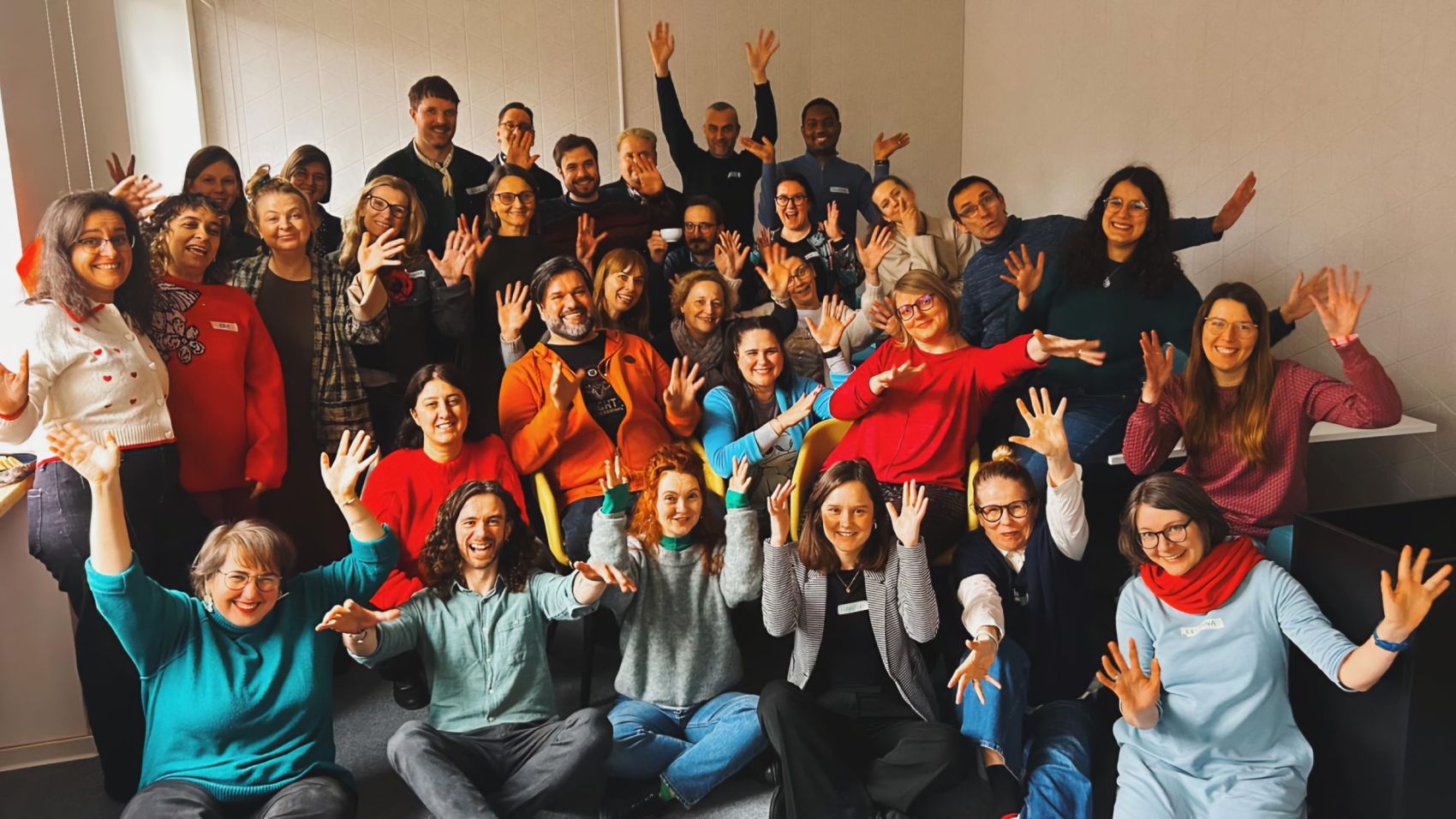
The 5th edition of the ID Kitchen Training Course was organized by SALTO Inclusion and Diversity in Youth in cooperation with SALTO Inclusion and Diversity in Education and Training. The online event took place from 15 to 17 October and was officially opened with a welcome speech by Antonija Gladović, Director of the Croatian National Agency.

The main aim of the training, facilitated by trainers Annamaria Simeone and Petar Dukić, was to support National Agency staff who do not work directly in the field of inclusion and diversity, and help them strengthen their competences in this area. By improving their understanding of inclusion and diversity issues and approaches, participants were encouraged to increase the impact and effectiveness of inclusion-related work within their respective NAs.

The training created a collaborative space for staff from the youth, education and training sectors, as well as from cross-sectoral National Agencies, to become familiar with ID concepts and the European ID policy framework. Participants had the opportunity to deepen their understanding of inclusion challenges at both national and European level, explore ways to address them, exchange ideas and good practices, and reflect on the values and goals guiding their professional roles.

While waiting for the next edition of the training, don’t forget to check out the ID Kitchen Podcast!