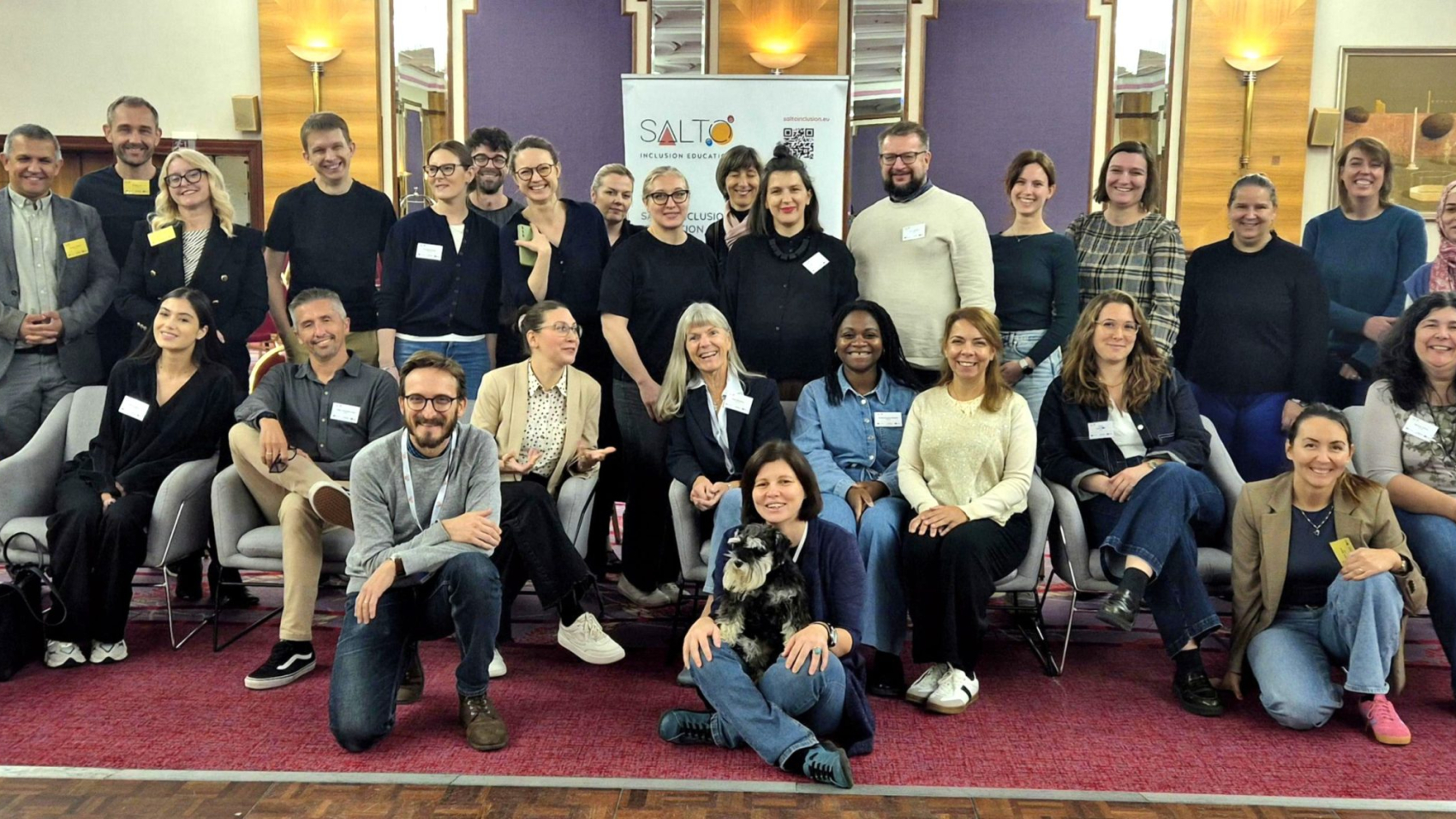
A group of people posing for a joint photo in front of a roll-up banner of the SALTO Resource Centre for Inclusion and Diversity in Education and Training.

Training on “Getting to Know the SALTO Resources”

From 6 to 8 October in Zagreb, the SALTO Resource Centre for Inclusion and Diversity in Education and Training (SALTO ID ET) organised a training course titled “Getting to Know the SALTO Resources.”

The event brought together more than 20 staff members from National Agencies (NAs) for Erasmus+ and the European Solidarity Corps (ESC) across Europe — including Inclusion and Diversity Officers as well as other NA experts interested in advancing inclusion within education and training.

The main objective of the training was to empower NA staff to confidently apply SALTO’s inclusion tools to foster inclusion and diversity (ID) within their respective areas of work.

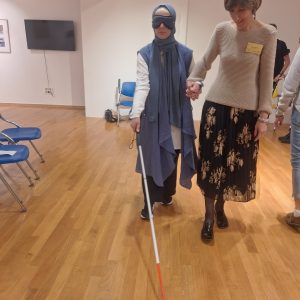
A woman with a headscarf and an eyeband walking with a white cane, alongside a sighted person.

Facilitated by Sunčana Kusturin and Domagoj Kovačić, the sessions used non-formal education methods and experiential learning principles, enabling participants to explore five SALTO ID ET tools through interactive, hands-on activities:

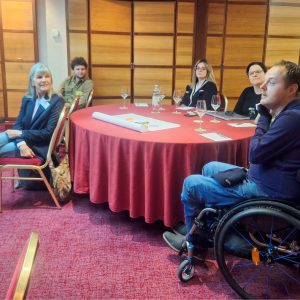
A group of people, sitting around a table talking, one of them in a wheelchair.

Upon completion, participants reported increased confidence in applying these tools in their daily work — from organising inclusive events and creating accessible web content to supporting beneficiaries in addressing inclusion within their Erasmus+ projects. They also enhanced their capacity to assess inclusion efforts in projects and to promote and disseminate SALTO tools to strengthen ID efforts in their respective fields.

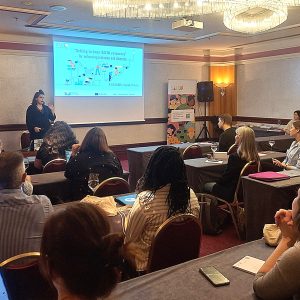
A group of people sitting and listening to a Power Point presentation given by a woman, titled "Getting to Know the SALTO Resources".

The event was opened by Ms. Lidija Živković, Head of SALTO ID ET, and featured sessions with several external experts and practitioners, including four Croatian Inclusion and Diversity Ambassadors:

  • Ms. Brigita Jerić (Slava Raškaj Centre for Education)
  • Prof. Tomislav Pavlović (Velika Ludina Primary School)
  • Prof. Lelia Kiš-Glavaš, PhD (Faculty of Education and Rehabilitation Sciences, Zagreb)
  • Prof. Mladen Tota (Čakovec High School)
  • Prof. Dejana Varnica (Primary school J. Matoš, Vukovar)

Particularly valuable contributions came from resource authors and experiential experts from the field as representatives of civil society:

  • Mr. Antonio Vicković (Centre Up2Date) co-led the session on web accessibility.
  • Prof. Ivana Majcen (ID Officer, CMEPIUS Erasmus+ Slovenia), author of the CLUE tool, presented its practical application.
  • Mr. Marijo Glibo (Centre Up2Date and Theatre of the Blind and Visually Impaired) and Mr. Roman Baštijan (Croatian Union of Youth and Students with Disabilities) facilitated activities on inclusive event planning and implementation.
  • Mr. Martin Bogdan (ACA- Academic Cooperation Association), as author, presented of the Establishing the Role of an Inclusion Officer in a Higher Education Institution: a Practical Guide

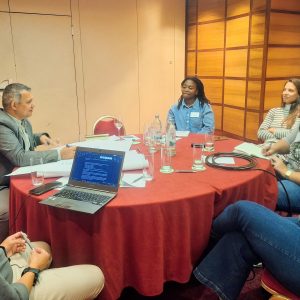
A group of people sitting around a table talking, with one laptop open on the table.

In the informal part of the programme, participants visited Zagreb’s Typhlological Museum, where they experienced an interactive guided tour highlighting the needs of visually impaired persons. The group also visited URIHO, a large centre for professional rehabilitation and employment of persons with disabilities, concluding the visit with a dinner prepared by URIHO employees.

A logo of the SALTO network spelling "SALTO News", with a small airplane flying off from a yellow sun-like circle.

The September edition of SALTO News is out!

The EU’s next long-term budget (MFF) will define how much funding will be available for a range of important causes, such as cross-border education, training and solidarity. Until October 8th, the European Commission gives you the chance to give your feedback in a public consultation exercise on the next MFF. 

In this month’s edition of SALTO News, you will also find: 

  • Other calls and publications. 

SALTO News is the official newsletter for the SALTO community—a network of 11 resource centres dedicated to promoting and enhancing the Erasmus+ and European Solidarity Corps programmes. You can browse previous editions of the newsletter here! 

To stay informed about the most recent developments and never miss an update, be sure to subscribe to SALTO News today! 
A logo of the SALTO network spelling "SALTO News", with a small airplane flying off from a yellow sun-like circle.

The August edition of SALTO News is out!

If you’ve ever wondered how to attract people facing barriers to Erasmus+ mobility, this month SALTO Inclusion and Diversity in Education and Training (ID ET) has some tricks and tips for you: our newest publication Outreach Recipes: Inclusion and Diversity in Erasmus has been published! 

In this month’s edition of SALTO News, you will also find: 

  • Other calls and publications. 

SALTO News is the official newsletter for the SALTO community—a network of 11 resource centres dedicated to promoting and enhancing the Erasmus+ and European Solidarity Corps programmes. You can browse previous editions of the newsletter here!

To stay informed about the most recent developments and never miss an update, be sure to subscribe to SALTO News today! 
participate in europe-Picsart-AiImageEnhancer

European Union: A Project United in Diversity

The link between the Erasmus+ programme’s horizontal priorities—inclusion and diversity, and participation in democratic life, common values, and civic engagement—is clear: true participation can only occur when safe, inclusive spaces are created where all people—regardless of their background—can engage as equals in decision-making processes that affect them.

As topics such as active participation, civic engagement, and European citizenship gain increasing importance, they require greater attention from stakeholders at all levels. To help strengthen a sense of belonging to the European Union and raise awareness of the importance of active citizenship, the Italian National Agency INDIRE, in collaboration with 10 other National Agencies, has launched a long-term activity: PEACE – Participation Erasmus Alumni for Civic Engagement.

Designed primarily for Erasmus+ programme participants and other stakeholders, PEACE introduces European integration from both civic and political perspectives. As part of this effort, the partnership has developed a series of video modules addressing a range of topics tied to the EU’s core values and goals. These include the European elections, EU history and institutions, cultural diversity, colonialism, and more—each discussed in relation to international mobility and the Erasmus+ programme.

One standout module, Diversity in Europe and European Citizenship Education, offers valuable insights into how the priorities of inclusion and participation interact within the Erasmus+ framework, viewed through multiple perspectives and forms of diversity.

To explore these important topics and access the full video series, visit the LTA PEACE webpage.

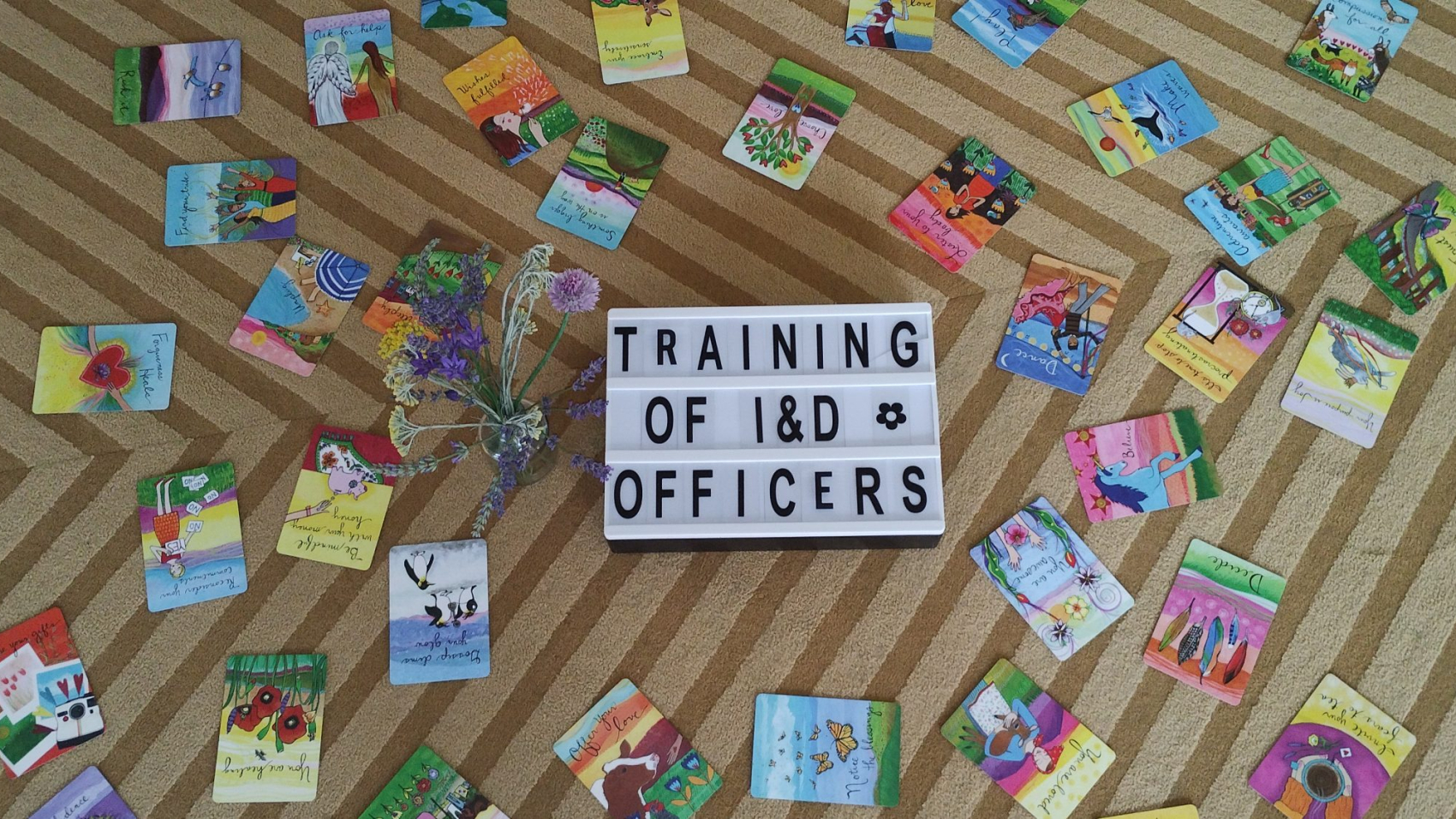
A photo of colorful cards and a sign that says "Training of I&D Officers"

Training of Inclusion and Diversity (ID) Officers

From June 9 to 11 in Zagreb, the SALTO Resource Centre for Inclusion and Diversity in Education and Training (SALTO ID ET) organized a Training of Inclusion and Diversity (ID) Officers for less experienced ID officers from the education and training sectors. The goal of the training was to strengthen their knowledge in this Erasmus+ programme priority area and improve their skills in leading workshops on these topics. The event brought together over 25 ID Officers from National Agencies across Europe. 

The meeting opened with a warm welcome by Ms. Lidija Živković, Head of SALTO ID ET, followed by an introduction session led by experienced ID trainers Gisele Evrard and Sunčana Kusturin, who facilitated the entire event. The first day of the training saw the participants set the framework for a safe and engaged learning environment as workshop participants and tackle the concept of ID in different systems and contexts. These insights were then built into sessions on preparing, facilitating and evaluating workshops and dealing with complex situations in workshop settings on the second day of the event, which closed with a special guided tour of Zagreb, based on the perspective of persecuted women throughout its history. 

According to the participants’ feedback, the training delivered  valuable practical lessons in sensitizing NA staff, beneficiaries and external Erasmus+ assessors to the importance of ID in E+ projects. The value of taking a step back to analyze both their role as participants and as workshop organizers in order to better understand the needs of beneficiaries and end users was recognized by the officers, many of whom stayed on to take part in the ensuing 8th Meeting of ID Officers in Zagreb. 

A man and a woman discussing in an office.

Fostering Inclusion & Diversity in Erasmus+: Tools and Cooperation for National Offices

On 29 AprilSALTO Inclusion and Diversity in Education and Training held an online event titled Fostering Inclusion & Diversity in Erasmus+: Tools and Cooperation for National Offices, aimed at Erasmus+ National Offices. The meeting brought together over 30 colleagues from the Mediterranean, Southeast Europe, Eastern Europe, and the Caucasus regions, with the purpose of presenting the available resources of our SALTO Centre and encouraging international cooperation among National Offices. 

The meeting opened with a warm welcome from the Head of SALTO ID ET, Lidija Živković, followed by a presentation on SALTO resources for supporting inclusion and diversity in higher education institutions and schools. Next came a presentation from Ivana Bijažić, International Contact Point and KA171 Programme Officer in the Croatian National Agency, on the top-up criteria in higher education, based on the Croatian example. The final session of the first part of the meeting was concluded by Suad Muhibić from the National Erasmus+ Office in Bosnia and Herzegovina, who presented the work of their office. 

In the second part of the meeting, two examples of good practices were introduced, each representing one of the action types open to participants from third countries not associated to the Programme: Innovating quality assessment tools for pharmacy studies in Bosnia and Herzegovina (IQPharm), a Capacity Building in Higher Education project by the University of Sarajevo, and AI4VET4AI – AI-powered Next Generation of VET, a project that is part of the Centres of Vocational Excellence action type, led by Algebra Bernays University. 

The meeting was officially closed by the facilitator, Domagoj Morić, who thanked everyone for their participation.