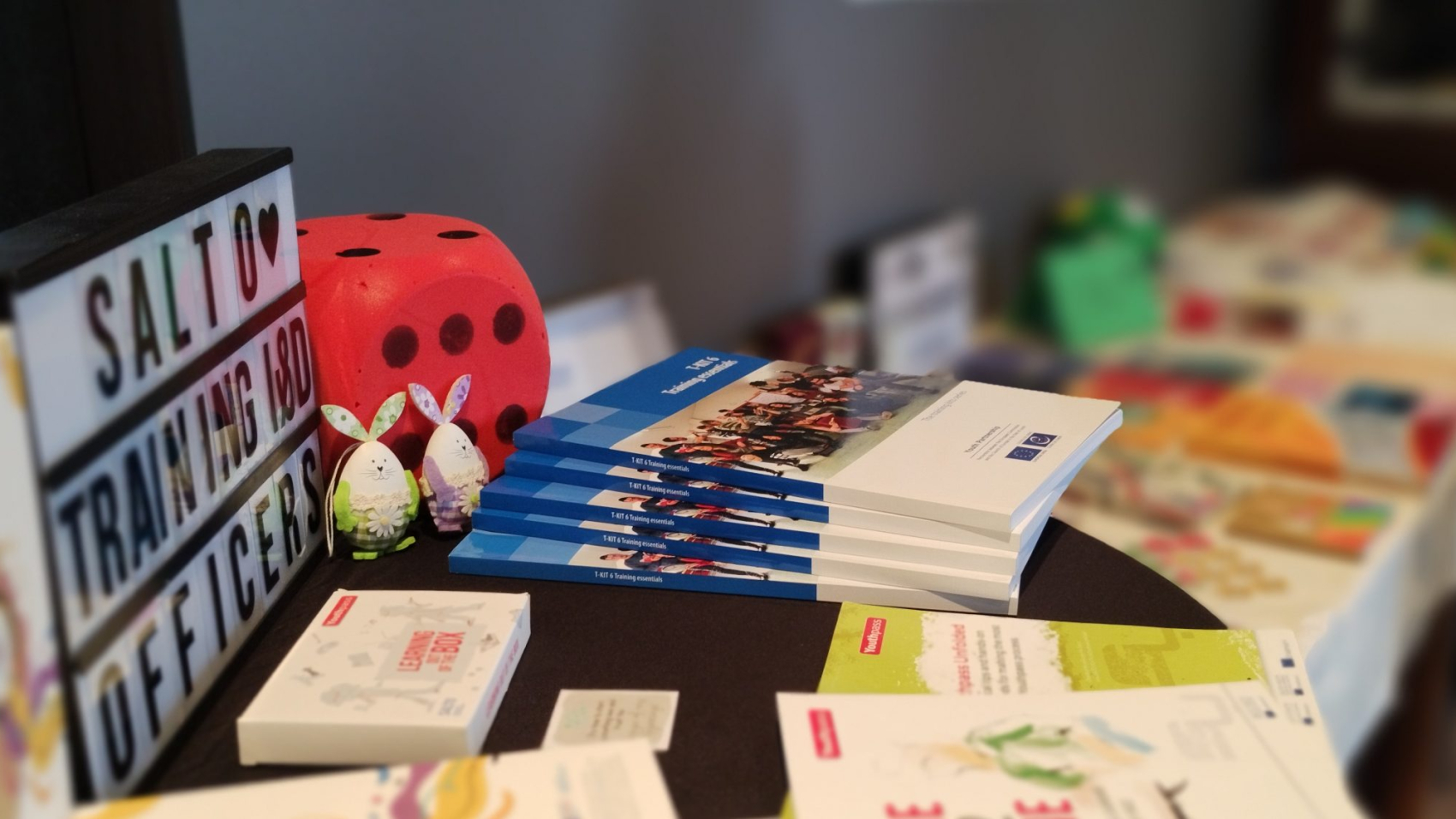
In early 2026, SALTO ID ET started a cycle of sessions on “training the trainers” for Inclusion and Diversity (ID) Officers from Erasmus+ National Agencies, aimed at strengthening their capacity to organize workshops on ID for National Agency staff and external experts involved in assessing and evaluating Erasmus+ projects. The training cycle has built on elements already tackled in the previous training of ID officers on designing a workshop (9 – 11 June 2025, Zagreb, Croatia). Some of the key topics of this training cycle included creating a safe learning environment, the principles and methods of non-formal education, approaches to workshop design and learning experiences, debriefing and facilitation skills, as well as feedback and evaluation.
This year’s training cycle began on February 11th with a preparatory online meeting between the participants and the facilitators, Sunčana Kusturin and Gisele Evrard, who presented some of the methodological principles of non-formal education when conducting training on ID. The group of ID Officers exchanged their experiences on delivering and/or participating in workshops for other NA colleagues, while taking stock of the needs of National Agencies on the topic of ID laid out in SALTO ID ET’s 2023 report. This meeting closed with a preparatory reading task for the ID Officers, who confirmed their participation in the main training event.
The latter took place from March 25 to March 27 in Zadar, Croatia, where the ID Officers convened for a two-and-a-half day training session dedicated to their development of workshop plans in small teams. The training tackled methods for ID Officers to engage other NA staff and external evaluators of E+ projects and to facilitate discussions on delicate topics like the personal barriers of people with fewer opportunities or their needs for financial and other support.
The workshop plans developed in Zadar were then individually implemented by the ID Officers in the form of practical workshops with a recommended duration of 60 – 120 minutes for 8-15 participants in their respective National Agencies from April to June 2026. The specific topics of workshops varied from country to country, depending on the key ID needs and challenges identified as relevant for the differing national contexts.
Finally, to follow up on the training, a final half-a-day online consultation session with the participating ID Officers was organised on June 10, where they shared their experiences and captured key lessons learned from the implementation of the workshops. The workshops developed during the training will be refined if needed and then shared with all NA officers and will become part of the working materials for ID officers which SALTO collects, shares and promotes.