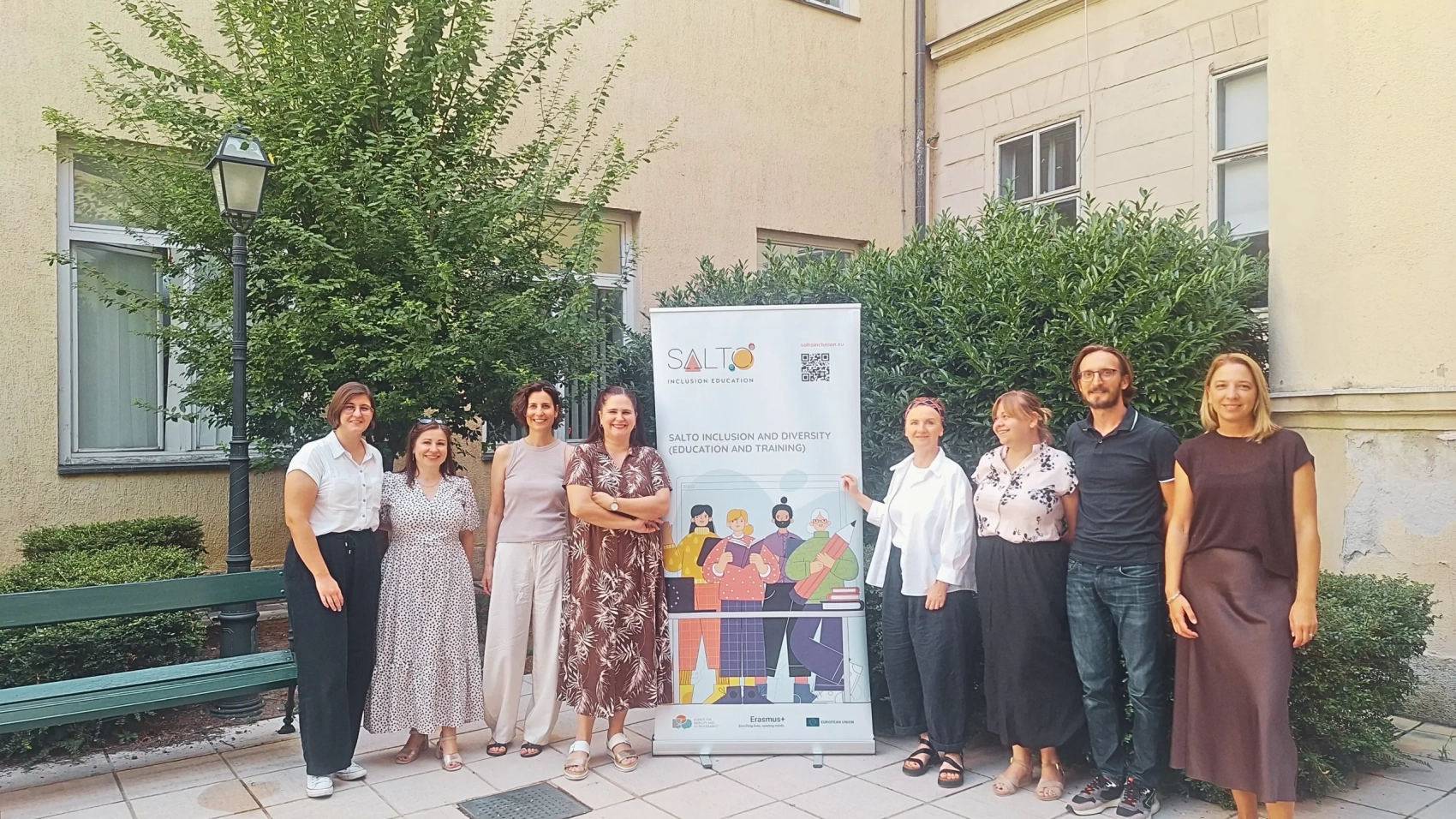
On August 26 and 27, the Croatian Agency for Mobility and EU Programmes (AMEUP) and the SALTO Resource Centre for Inclusion and Diversity in Education and Training (SALTO ID ET) had the pleasure to host two staff members of the Czech National Agency for International Education and Research, Zdeňka Vlasáková and Eva Teysslerová, for a job shadowing focused on inclusion and diversity in the implementation of E+ projects.
Dora Lukač and Tajana Krstonošić from SALTO ID ET held several meeting sessions with the Czech colleagues, walking them through the chief policy documents on ID on the European and Croatian national level, as well as the various ways in which inclusion is mainstreamed into the work of National Agencies , including through the role of national ID Officers, ID ambassadors, inclusion contact points, and through inclusion-focused Long-Term Activities (LTAs) and Training and Cooperation Activities.
AMEUP’s Department of Vocational Education and Training, represented by Sandra Buljan and Maja Tretinjak Raguž, held another session with the Czech guests dedicated specifically to mobility projects in KA1, a sectoral focus in their daily work. The job shadowing closed with a presentation about the establishment, functioning, activities and resources of SALTO ID ET and the potential of strategic partnerships in LTAs focused on inclusion and diversity.
Cycle of SALTO ID ET’s training sessions for national Inclusion & Diversity Officers completed
In early 2026, SALTO ID ET started a cycle of sessions on “training the trainers” for Inclusion and Diversity (ID) Officers from Erasmus+ National Agencies, aimed at strengthening their capacity to organize workshops on ID for National Agency staff and external experts involved in assessing and evaluating Erasmus+ projects. The training cycle has built on elements already tackled in the previous training of ID officers on designing a workshop (9 – 11 June 2025, Zagreb, Croatia). Some of the key topics of this training cycle included creating a safe learning environment, the principles and methods of non-formal education, approaches to workshop design and learning experiences, debriefing and facilitation skills, as well as feedback and evaluation.
This year’s training cycle began on February 11th with a preparatory online meeting between the participants and the facilitators, Sunčana Kusturin and Gisele Evrard, who presented some of the methodological principles of non-formal education when conducting training on ID. The group of ID Officers exchanged their experiences on delivering and/or participating in workshops for other NA colleagues, while taking stock of the needs of National Agencies on the topic of ID laid out in SALTO ID ET’s 2023 report. This meeting closed with a preparatory reading task for the ID Officers, who confirmed their participation in the main training event.
The latter took place from March 25 to March 27 in Zadar, Croatia, where the ID Officers convened for a two-and-a-half day training session dedicated to their development of workshop plans in small teams. The training tackled methods for ID Officers to engage other NA staff and external evaluators of E+ projects and to facilitate discussions on delicate topics like the personal barriers of people with fewer opportunities or their needs for financial and other support.
The workshop plans developed in Zadar were then individually implemented by the ID Officers in the form of practical workshops with a recommended duration of 60 – 120 minutes for 8-15 participants in their respective National Agencies from April to June 2026. The specific topics of workshops varied from country to country, depending on the key ID needs and challenges identified as relevant for the differing national contexts.
Finally, to follow up on the training, a final half-a-day online consultation session with the participating ID Officers was organised on June 10, where they shared their experiences and captured key lessons learned from the implementation of the workshops. The workshops developed during the training will be refined if needed and then shared with all NA officers and will become part of the working materials for ID officers which SALTO collects, shares and promotes.
Movetia Academy session on inclusive international mobility in Higher Education
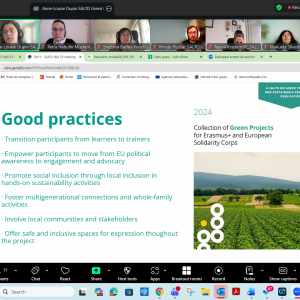
On May 28th, more than 30 internationalisation professionals from Swiss Higher Education Institutions (HEIs) gathered online for a Movetia Academy session dedicated to Inclusion and Diversity in mobility and facilitated by Chantal Sistek and Ella Spadaro, scientific advisors at Movetia. Designed for Swiss International Relations Offices (IROs), inclusion officers and researchers, the session focused on how their institutions can widen participation and better support students with fewer opportunities. The meeting provided both strategic perspectives and practical tools to strengthen inclusive approaches in international mobility.
The session opened with a shared reflection on the barriers students with opportunities face in international mobility, ways HEIs can foster more inclusive participation and the tools and resources available for the task. Given that many Swiss HEIs are not yet actively using Erasmus+ tools and support, the first presentation, delivered by Hrvoje Ryznar, Advisor at SALTO ID ET, focused on introducing participants to the SALTO Network, explaining its role within Erasmus+ and showcasing a range of resources, services and tools designed to help HEIs implement inclusion measures. Several ways in which Swiss HEIs can benefit from capacity-building opportunities were outlined, including through mentorship offers provided by SALTO ID ET.
In the second keynote, Martin Bogdan (Academic Cooperation Association) introduced the DIEM project, presenting approaches to making international mobility more inclusive. He highlighted structural and individual barriers faced by students and outlined practical first steps institutions can take to develop more inclusive strategies within their own contexts.
As part of its broader mission, the Movetia Academy acts as a Professional Learning Community, where internationalisation professionals can bring their needs and experiences, share their practice, and work on their own professional challenges while collaborating and learning from one another.