Building Digital Skills Early and Equitably: How an Erasmus+ Project Is Advancing Inclusive STEM Education
Putting inclusion and gender equality at the heart of digital competences development in early education.
| Organisation | Centar za razvoj i učenje Mali princ |
| Country | Croatia |
| Project title | Coding kids! – An intersectoral collaboration for the development of digital pedagogy in STEM education |
| Project number | 2022-2-HR01-KA210-SCH-000092351 |
| Format | Small-scale partnerships in school education |
| Sector | Pre-school and primary education |
| Target group | School staff and pupils |
| Erasmus+ project results | https://erasmus-plus.ec.europa.eu/projects/search/details/2022-2-HR01-KA210-SCH-000092351 |
Across Europe, educators working with young learners face a shared challenge: how to introduce digital and STEM skills at an early age in ways that are engaging, inclusive, and developmentally appropriate. While digital transformation is reshaping education systems, early childhood and primary education often lack tailored tools that combine pedagogy, play, and inclusion.
To respond to this need, partners from the formal and non-formal education sectors joined forces through the Erasmus+ project “Coding kids! – An intersectoral collaboration for the development of digital pedagogy in STEM education”. Coordinated by the NGO Centar za razvoj i učenje Mali princ (Croatia) and in partnership with the RITE Research Institute for Technological Evolution (Cyprus) and the Rokiskio lopselis-darzelis Varpelis kindergarten (Lithuania), the project brought together educators, trainers, and IT specialists to design practical digital learning resources for children aged 5 to 12.
Digital Pedagogy Through Cooperation
The project was built on a simple premise: effective digital education requires collaboration across sectors and countries. By pooling expertise from early childhood education, primary schooling, non-formal learning, and technology development, the partnership aimed to modernise STEM education while keeping inclusion at its core.
Rather than focusing solely on technology, the project emphasised digital pedagogy – how digital tools can meaningfully support learning, creativity, and competence-based education. This approach resulted in the joint development of learning scenarios, teaching methods, and resources adaptable to different educational contexts.
Coding Kids!: A Game-Based Learning Tool
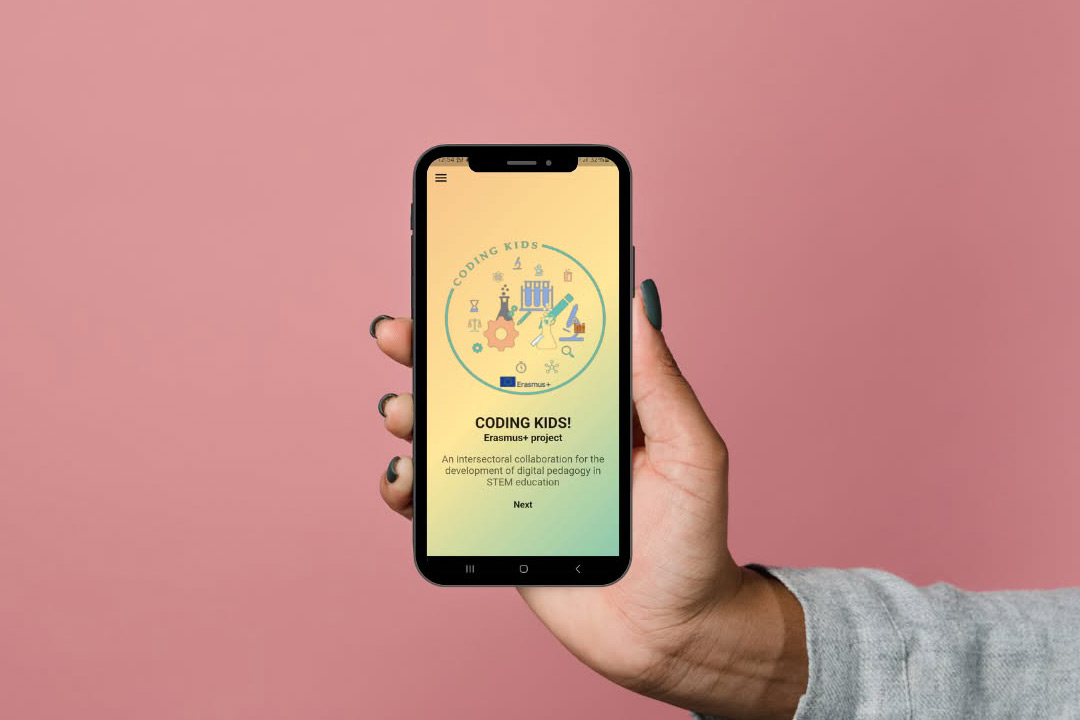
At the heart of the project lies Coding Kids!, a free Android application designed to introduce the basics of programming to children aged 5 – 12 through game-based learning. The app supports early development of logical thinking, problem-solving, and digital competence while remaining accessible to young learners.
The partnership developed:
- four digital educational games, each linked to a specific STEM area;
- structured learning scenarios connecting gameplay to educational outcomes;
- an educator’s manual with ideas for blended learning, offline activities, and inclusive classroom use.
The app was created as an open educational resource (OER) and is available in multiple languages, allowing educators and parents across Europe to use it freely.
Inclusion and Gender Equality in Practice
From the outset, the project paid particular attention to gender balance and inclusion in STEM education. Visual design and game elements were intentionally developed to appeal to girls, addressing persistent gender disparities in digital and technical fields.
In response to feedback during implementation, partners expanded the project’s inclusion dimension:
- 44 children participated in pilot testing—exceeding the original target of 30;
- 12 children in foster care from the Maestral Children’s Home in Split (Croatia) were included;
- children facing geographical barriers and developmental challenges (such as speech impairments) were actively involved.
An additional chapter on inclusion was added to the educator’s manual, outlining how digital games can support children with diverse learning needs, including ADHD, dyslexia, and speech difficulties.
Training and Multiplier Activities
To support sustainable use of the tool, the project organised a three-day international training activity for educators and partner staff. Participants explored the app’s pedagogical foundations, usability, and potential for reuse in different learning environments.
Several multiplier events followed at national and local levels, engaging educators, parents, NGOs, and public authorities. These events helped ensure that the project outcomes reached beyond the partnership and were embedded into everyday educational practice.
Impact Beyond the Project
Today, Coding Kids! continues to be used by partners and associated stakeholders in Croatia, Cyprus, and Lithuania. Kindergartens, primary schools, NGOs, and research institutions have integrated the app into workshops, classroom activities, and blended learning sessions.
Parents were also engaged, welcoming the opportunity to offer children quality screen time that combines learning and play. The project’s intersectoral network remains active, supporting dissemination, new collaborations, and further innovation in early STEM education.
Connecting Digitalisation and Inclusion
By combining digital transformation with inclusion, the project demonstrates how Erasmus+ small-scale partnerships can deliver practical, transferable solutions. Through cooperation, creativity, and responsiveness to learners’ needs, the project contributes to more equitable access to STEM education—and helps ensure that digital skills development begins early, for all children.