
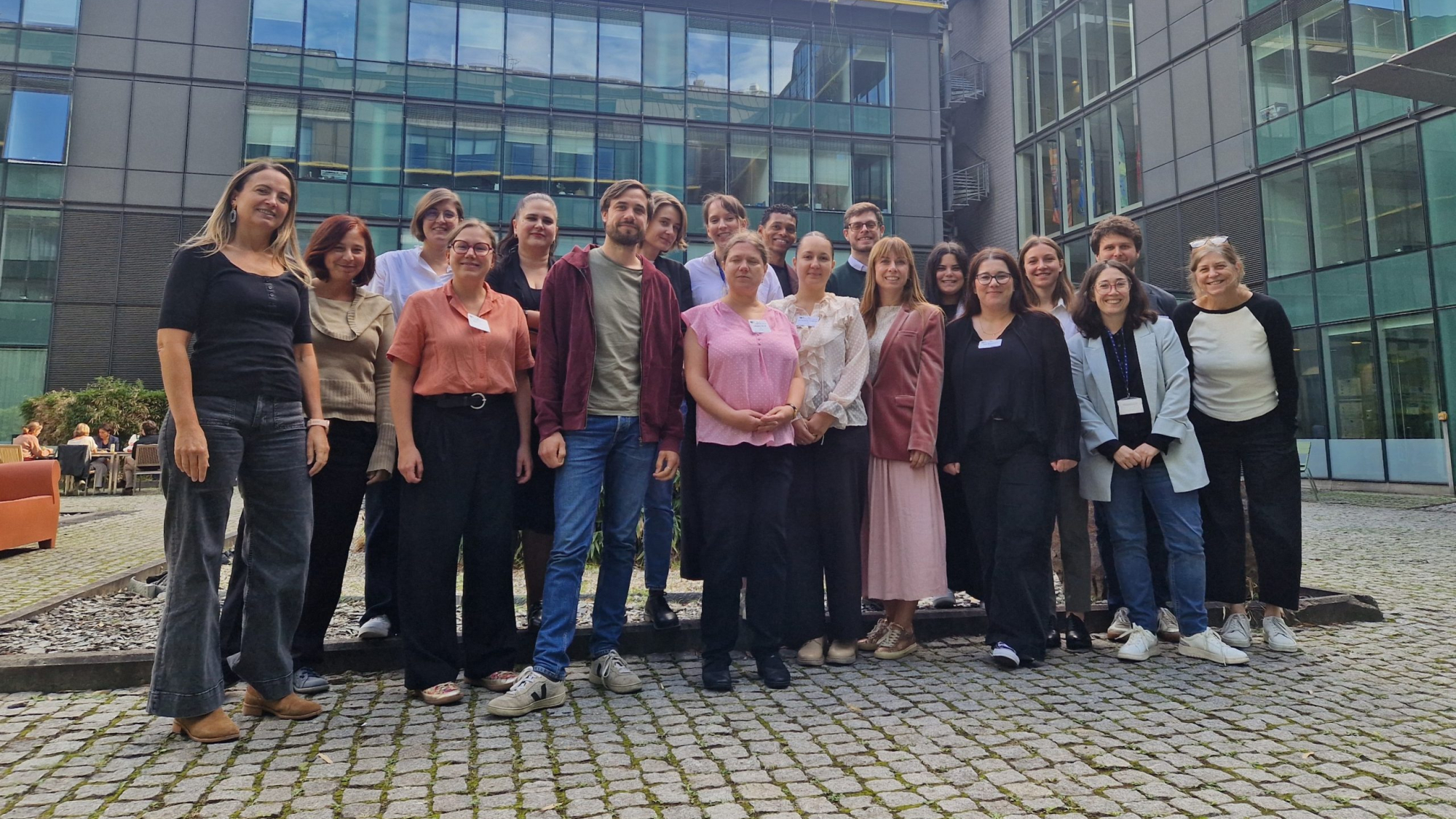
On 24 September 2026, the European Commission held a consultation with different stakeholders on the Erasmus+ and European Solidarity Corps Inclusion and Diversity Strategy, at the DG EAC premises in Brussels. It was organised with the support of two SALTO Resource Centres for Inclusion and Diversity in Education and Training (SALTO ID ET) and for Youth. SALTO ID ET was actively represented by Dora Lukač and Tajana Krstonošić. The consultations brought together Brussels based stakeholders from the youth, sport, education and training fields, representing diverse perspectives on inclusion and diversity.
Participants included representatives from various settings of interest for the education and training fields, such as:
- Academic Cooperation Association (ACA)
- Lifelong Learning Platform (LLLP)
- European Forum of Technical and Vocational Education and Training (EfVET)
- Erasmus Student Network (ESN)
- Inclusion Europe
- European Disability Forum
- European Federation for Intercultural Learning (EFIL)
This activity aimed to gather input as part of a wider process of revising the Erasmus+ and European Solidarity Corps Inclusion and Diversity Strategy, jointly carried out by the European Commission and the two SALTO Inclusion and Diversity Resource Centres.
This consultation built on work already under way, including the contribution to the mid-term evaluation of the Erasmus+ and European Solidarity Corps programmes and the development of a monitoring and evaluation framework for the Strategy.
The event began with a joint discussion on the barriers, accessibility and priorities for the revised Strategy. In smaller groups, participants explored specific aspects of the strategy, its content and structure, including impact monitoring and ways to strengthen the capacity of National Agencies and organisations to support inclusion and diversity in practice.
Ongoing stakeholder input gathered through consultations like this helps shape the revised Strategy, bring practical experience into the process and inform preparations for the next programme period.