A Disadvantaged Hungarian Community Transformed
A Hungarian school develops its pupils’ skills in inclusion, digitalisation and environmental awareness while leaving no one behind.
| Organisation | Sója Miklós Görögkatolikus Óvoda és Általános Iskola |
| Country | Hungary |
| Project title | Hátrányos helyzetű tanulók készségeinek fejlesztése az inklúzió, digitalizáció és környezetvédelem területén a pedagóguskompetenciák továbbfejlesztésével és a nemzetközi jó gyakorlatok megismerése által / Improving the skills of pupils from disadvantaged backgrounds in the areas of inclusion, digitalisation and environmental protection through the development of teacher competences and learning from international good practices |
| Project number | 2023-1-HU01-KA122-SCH-000131108 |
| Format | Short-term projects for mobility of learners and staff in school education |
| Sector | School education |
| Target group | School staff and pupils (including those with fewer opportunities, such as children from the Roma community) |
| Erasmus+ project results | https://erasmus-plus.ec.europa.eu/projects/search/details/2023-1-HU01-KA122-SCH-000131108 |
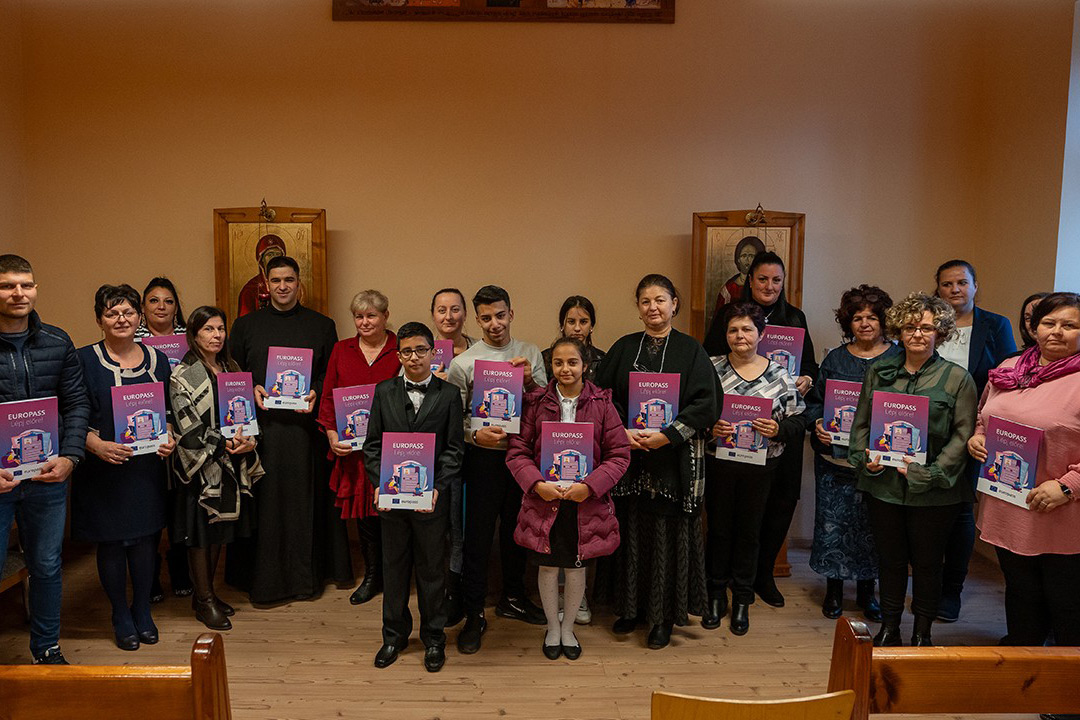
In the heart of Nyíregyháza, on the edge of one of Hungary’s most disadvantaged regions, stands the Sója Miklós Greek Catholic Kindergarten and Primary School. For the Roma families living there, daily life often means facing social and economic challenges. Yet, through determination and the power of education, this small school has become a place of hope, innovation, and change.
Thanks to an Erasmus+ project, the school is opening new paths for its pupils and teachers—proving that where there is collaboration, learning, and care, there are no limits to what one can achieve. Have a look at what the school has achieved in this video and read more about it in our following article.
From Barriers to Bridges
Despite the barriers of poverty and isolation, the school’s community came together with one clear purpose: to develop pupils’ skills and competences in inclusion, digitalisation, and environmental awareness—while motivating them to stay open and curious about the world.
Their Erasmus+ project, titled “Improving the skills of pupils from disadvantaged backgrounds in the areas of inclusion, digitalisation and environmental protection through the development of teacher competences and learning from international good practices”, was built on a simple but powerful idea: that learning from others can help us all grow stronger.
Through international collaboration, teachers and pupils alike have discovered that inclusion is not just a policy—it’s a daily practice that can transform lives.
Learning from Europe’s Best
To strengthen their approach, teachers travelled to Germany and Italy for professional learning and job shadowing.
In Rostock, four teachers spent a week exploring eco-school initiatives, environmental education, and inclusive teaching practices. Kindergarten staff joined a visit to the Stadtweide Eco-Kindergarten in Rostock—a trip that left a lasting impression. “This visit gave new impetus to our environmental work,” one participant shared. “It didn’t just shape our school—it shaped our community.”
Another group of six colleagues visited Florence, where they learned about digital education and new methods for supporting pupils with learning difficulties.
These experiences sparked creativity and reflection among the staff, who returned home with renewed motivation and a wealth of ideas to share.
Pupils as Global Learners
For the children, the project was an equally life-changing adventure.
Four pupils from low-income Roma families travelled to Rostock for a five-day group mobility—an unforgettable experience that allowed them to attend classes with local children and learn in a foreign language environment for the first time. They discovered the power of digital tools, teamwork, and environmental awareness while forming friendships that crossed cultural borders.
The school ensured that every detail was carefully prepared: pupils attended language lessons and cultural training sessions, and their parents were kept informed through meetings and individual support. Extra financial assistance was provided for families with fewer resources, ensuring that no one was left behind.
As one teacher reflected, “For these children, this journey was not just about travel—it was about confidence, belonging, and believing in their own abilities.”
Inclusion in Action
Inclusion was not a separate goal—it was the heart of the project.
The school made it a priority to involve participants with fewer opportunities, both among students and staff, with 14 teachers pursuing the opportunity of job shadowing and four children with fewer opportunities taking part in the mobility. They received mentoring and tailored preparation to ensure equal participation and success.
The leadership’s approach was both compassionate and empowering: the head of the institution personally encouraged staff to apply, supported their preparation, and created a culture where everyone’s contribution was valued. For many, this was the first time they felt their personal and professional development were truly connected.
Adapting Good Practices for the Future
One of the most meaningful outcomes of the project came from Italy, where the team learned about an effective approach to supporting students with learning difficulties—the Personal Development Plan (PDP).
This flexible and collaborative document, created by teachers and health professionals together, allows the tracking of each student’s development while highlighting their strengths and resources. When a child changes schools, the PDP follows them—ensuring continuity and care.
By September 2024, the Sója Miklós School began applying this method not only locally but across 18 other institutions within the Greek Catholic Diocese. They also established an eco-working group and built a partnership with their German peers, who agreed to visit Hungary later on.
By doing so, the school proved that their exchange of ideas can create a ripple effect of inclusion and sustainability across the region.
Sustainable Change Rooted in Community
For a school rooted in one of Hungary’s most disadvantaged communities, the project became much more than a professional exchange—it became a story of empowerment and unity.
It strengthened family engagement, improved teacher competences, inspired students, and promoted both digital and environmental awareness in everyday school life. The use of digital tools even extended to communication with parents, building stronger bonds and greater trust.
As one participant put it:
“Participation in the project shaped not only our lives, but also the life of our community. It gave us the opportunity to move forward.”
Through the Erasmus+ programme, the Sója Miklós Greek Catholic Kindergarten and Primary School has shown that inclusion begins with empathy, that digitalisation can bring people closer, and that environmental awareness can start with the smallest seeds of change, especially if they come from children.
This Hungarian school proves that when we learn from one another, education truly becomes the bridge to a better future.